

I've spent nineteen years hauling freight up and down I-75 and I-40, and if you ask me what wears a body down faster than bad food or bad sleep, I'll tell you it's the seat. Not the mattress in my sleeper, the actual driver's seat, the one I'm strapped into for ten or eleven hours some days. My lower back started barking at me somewhere around year twelve, and by year fifteen I was popping ibuprofen before every shift just to get moving in the morning. My wife Donna found the Everlasting Comfort Original Lumbar Support Pillow on Amazon a little over a year ago, after I'd complained for the third week running that I couldn't get comfortable no matter how I adjusted the seat. I've had it strapped to my truck seat, and on days off, sitting in my recliner at home in Knoxville, for about thirteen months now. Here's the real report, not the marketing version.
I want to be straight with you up front. I'm not a doctor, and I'm not going to tell you a foam pillow fixes a real medical back problem. What I can tell you is what changed for me, a fifty-one-year-old driver with more hours logged sitting than most desk workers put in over a decade, after wedging this thing behind my lower back for a year of actual shifts and actual weekends.
The Quick Verdict
Held its shape for over a year in a truck seat I'm in and out of a hundred times a week, and it's the first lumbar pillow that actually stayed put on cloth upholstery, but the strap system isn't built for every seat and the cover runs warm in summer.
Amazon Check Today's Price →Tired of your lower back seizing up an hour into a shift?
This is the pillow I've had strapped behind my back for over a year of truck seats and recliners. Check today's price and real buyer reviews on Amazon.
Amazon Check Today's Price on Amazon →How I've Used It
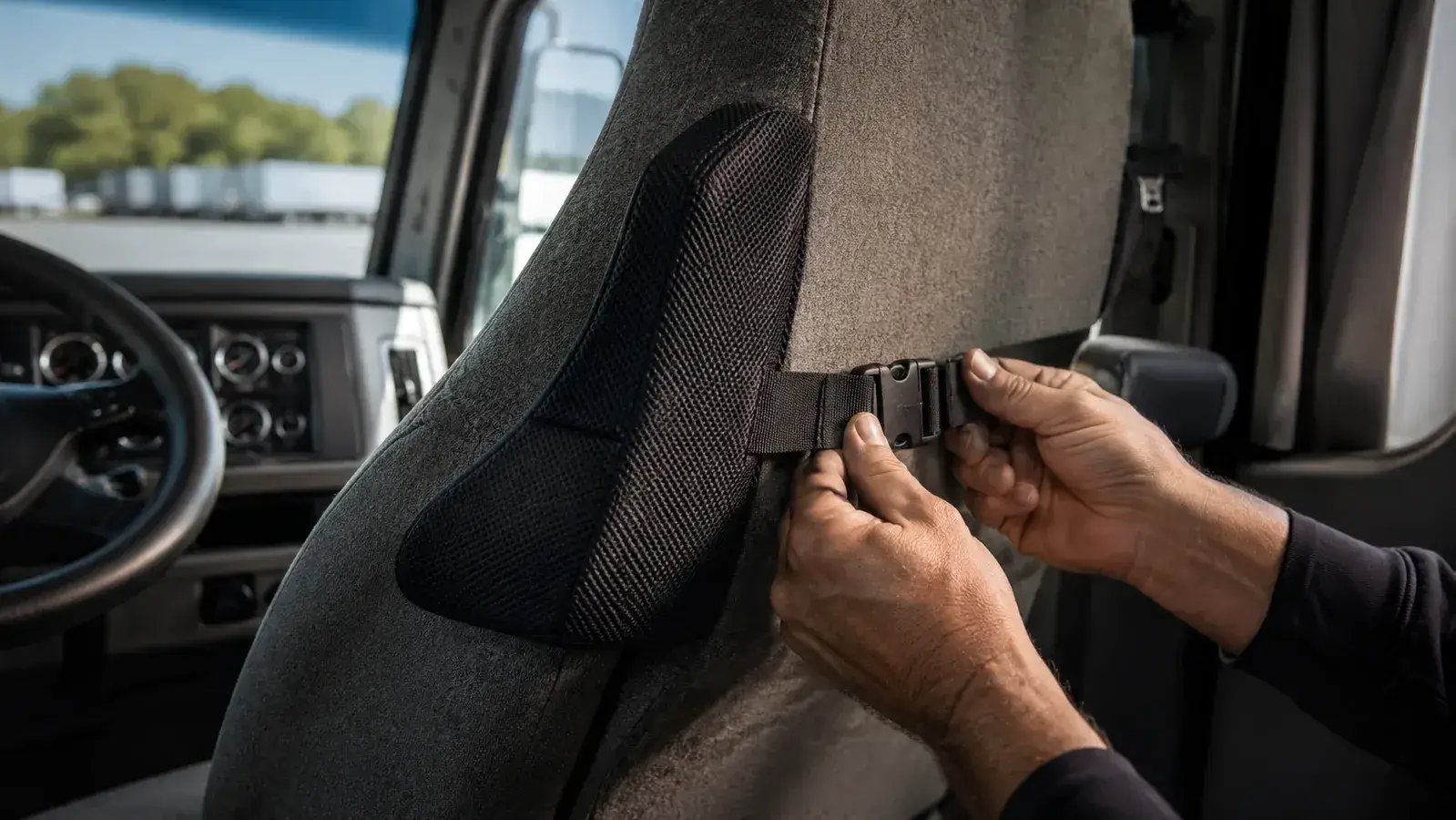
I run mostly Southeast and Midwest routes for a regional carrier out of Knoxville, which means long stretches at highway speed with maybe one real stop every few hours. That's a lot of uninterrupted sitting in a seat that, no matter how many times the shop adjusts the air ride, was never built with my particular spine in mind. I strapped the Everlasting Comfort pillow to the seat back in early July of last year, right around the small of my back, using the elastic straps that come with it looped around the headrest posts and the base of the seat.
I'm 5'11", about 210 pounds, and I've got the kind of stiffness that comes from two decades of sitting more than standing, nothing diagnosed as anything serious, just the ordinary wear of the job. I wore, or rather sat against, this pillow on nearly every shift since last July, and I also moved it into my recliner at home on my days off, just to get a fair read on how it did outside the truck too. I kept a little notebook in my cab door pocket, nothing scientific, just a scribbled note most evenings on how my back felt by the end of a shift.
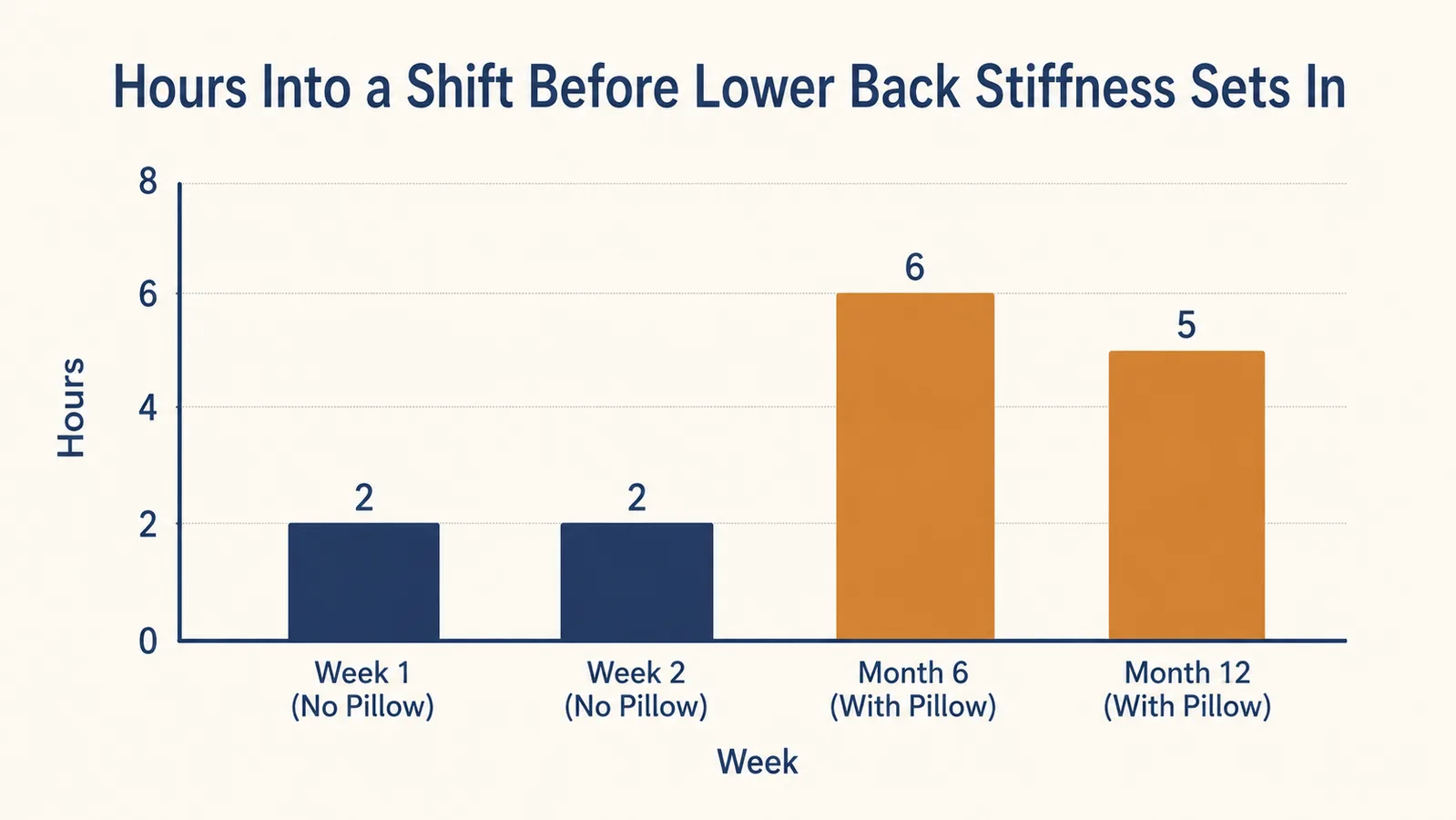
By about the third week I noticed something I hadn't expected going in. It wasn't that my back pain disappeared, it hadn't, but the point in a shift where I usually started shifting around trying to find relief crept later and later. What used to hit me two hours in was showing up closer to five or six hours in by the second month. That's not nothing when you're looking at a ten-hour day.
That first month, I'll admit I was skeptical. Donna had bought me lumbar cushions before, one from a discount store rack that I used for maybe two weeks before it ended up in the sleeper closet, forgotten. What kept this one on my seat past week two was simple, it didn't slide down every time I got in and out of the cab, which sounds small until you've had a cushion dump itself onto the floor mat every single stop for a month straight. By the time I'd logged a full season of shifts, spring into summer, I'd stopped thinking about it at all, which for me is the real sign something's working. I only notice gear when it's failing me.
The Shape and Foam, What's Actually Doing the Work
The pillow itself is a curved block of memory foam shaped like a shallow half-moon, wider at the bottom than the top, wrapped in a breathable mesh cover with a firmer inner layer holding its shape underneath. It's not a flat cushion you just prop behind you, the curve is meant to sit into the small of your back and fill the gap that a standard truck or car seat leaves right where your spine naturally arches inward. That gap is the whole problem with most factory seats, they're flat or slightly concave right where a lower back needs support pushing forward.
The foam itself has a medium firmness, not the soft memory foam you'd get in a pillow-top mattress topper, and not rock hard either. It gives a little under pressure and then holds. I noticed early on that it doesn't bottom out the way a cheap cushion does after a few weeks, where you can feel the base of the seat through it by month two. A year in, I still get real resistance when I lean back into it, not the mushy give of foam that's broken down.
The mesh cover matters more than I expected going in. It's got some stretch to it and it breathes better than the vinyl-backed pillows I tried years ago that turned into a sweat trap by hour three. It won't keep you cold, foam against your back for ten hours is going to build some warmth no matter what, but it breathes noticeably better than the alternative I used before, which was basically a rolled-up sweatshirt wedged behind me.
A Year In, How It's Held Up
This is the part that actually matters for a purchase like this, because plenty of cushions feel great for the first month and then flatten out or the cover starts pilling and fraying. I've run this pillow through a full year now, meaning every season, every temperature swing a truck cab goes through, and every wash cycle Donna's put the cover through when it needed a clean. The foam core hasn't compressed in any way I can feel. I checked it against a photo I took the first week I had it, laid flat on the kitchen table, and the curve profile looks basically identical.
The cover has held up with only minor cosmetic wear, a little bit of fuzzing on the mesh where it rubs against the seat fabric every time I get in and out, but no tears, no seams coming loose, nothing structural. I wash the cover roughly once a month, cold water, air dry, since it comes off with a zipper rather than being sewn shut like some of the cheaper knockoffs I've seen at the truck stop stores. That's a small detail that made a real difference over a year of actual daily use.
I compared notes with another driver at my terminal, a guy named Ray who bought one after riding with me for a training run and asking what was strapped to my seat. He's been running it about eight months now and reports the same thing, no real breakdown, the straps are the only part that show any stretch over time, and even that's minor.
Truck Seat vs Recliner, Two Very Different Jobs
Here's something I didn't expect when I started moving this pillow between my truck and my recliner at home. The strap system that works so well in a truck seat, looping around the headrest posts and cinching down snug, doesn't translate cleanly to a recliner. My recliner at home doesn't have headrest posts to loop around, so at home I just set the pillow in place and let my own weight hold it against the backrest. It works fine sitting still, but if I shift around a lot watching a ballgame, it can slide down a couple inches and need repositioning.
In the truck seat, it's a different story. Once that strap is cinched around the seat frame, the pillow does not move, not over rough pavement, not through hard braking, not when I'm twisting around checking my blind spot. That's the setting this pillow was clearly designed for first, a seat you're strapped into and moving around in constantly, and it delivers there better than anywhere else I've tried it.
The Strap, What Nobody Tells You
Before this one, I tried a cheaper lumbar cushion off a truck stop rack, no brand name I recognized, and it had a single elastic band that stretched out within a month and left the cushion sagging halfway down the seat by lunchtime most days. The Everlasting Comfort pillow uses a two-strap system instead, one higher and one lower, which is what actually keeps it seated in the right spot on a moving vehicle seat. That's the real difference between this and the bargain option, not the foam so much as the mounting hardware.
What nobody tells you buying this online is that the strap length is fixed and not adjustable beyond a couple of buckle notches. My seat frame is a fairly standard setup and the straps reached fine, but a driver I know with a different make of truck said his seat frame sat wider and the straps were stretched close to their limit to reach around it. If your seat has an unusual shape or a bucket design with no clear frame to loop around, it's worth checking seat photos or measurements before you buy, because the strap system is the one part of this pillow that isn't one-size-fits-all.

What Else I Looked At First
I didn't buy this pillow blind. Before Donna ordered it, I'd already tried two other fixes. The first was an inflatable lumbar support that clips onto the seat and pumps up with a squeeze bulb, and it worked for about a week before the valve started leaking air overnight, so I'd climb in every morning to a flat cushion. The second was a full seat cover with built-in padding, which felt fine in the showroom photos but turned out to bunch up under me after an hour of driving, shifting the padding away from my lower back exactly when I needed it there.
Compared to both of those, the Everlasting Comfort pillow is a simpler idea done right. It's one shaped piece of foam that stays where you put it, instead of an air chamber that can leak or a full cover that moves independent of your spine. I'm not saying every alternative on the market is bad, there are other lumbar pillows worth a look, and I cover a direct side-by-side against one popular generic option in a separate comparison. But for my money, the simplicity of a strapped foam block beat both of the more complicated setups I tried first.
What I Liked
- Curved memory foam holds its shape after a full year of daily use in a truck seat
- Two-strap mounting system stays put through rough pavement and hard braking
- Zip-off mesh cover machine washes without the seams giving out
- Firm enough that it doesn't bottom out, unlike the foam in cheaper cushions
- Works in a car seat, office chair, or recliner, not just a semi
Where It Falls Short
- Straps are fixed length, wide or oddly shaped seat frames may not fit well
- Mesh cover runs warm on long summer shifts without strong cab AC
- Slides slightly in a recliner since there's no frame to strap it against
- Won't resolve a real medical back problem, it's support, not treatment
It's not going to cure a bad back. But it's the first cushion I've strapped into a seat that was still doing its job on day 400, not just day four.
Who This Is For
If you spend real hours a day sitting in a seat that doesn't fit your spine, a truck seat, an office chair, a long commute in a sedan, this pillow addresses a genuine problem. It's also a solid pick if you've tried a cheap lumbar cushion before and had it go flat or slide down within a few weeks, the strap system and firmer foam here are built for exactly that kind of daily grinding use. If you want to see how it actually stacks up spec for spec against a generic option, I put together a full Everlasting Comfort vs generic lumbar pillow comparison covering price, strap design, and how each held up over time.
Who Should Skip It
If your seat frame is unusually wide or doesn't have a clear spot to loop the straps around, you may find the fit frustrating rather than helpful, and it's worth checking the strap length against your own seat before ordering. Drivers who run hot through summer without solid climate control might also find the mesh cover holds a bit more warmth than they'd like over a full shift. And I want to say this plainly. If your back pain doesn't ease up over time, or you start noticing numbness or weakness running down your leg, that's not something a cushion is going to solve, and it's worth getting in to see a doctor rather than trying to fix it with gear. I go into more of the day-to-day nitpicks, including a couple of things I wish I'd known before I ordered, in my full honest review of the Everlasting Comfort pillow.
Thirteen months later, this is still the pillow strapped into my seat every single shift.
If a long day behind the wheel or the desk is wrecking your lower back, this is the one upgrade I'd tell another driver to make first. See current price and real buyer reviews on Amazon.
Amazon Check Today's Price on Amazon →