

I've put more miles in a truck seat than most people put on their car in a lifetime. Twenty years of driving does something to your lower back that no gas station energy drink fixes. About a year and a half ago I started running the Everlasting Comfort lumbar support pillow in my Freightliner, and it's a big part of why I can still get out of the cab after a ten-hour shift without holding the door handle like an old man. Before I settled on that one, I ran a generic version alongside it for three months in my wife Denise's car, so I'd have a real comparison instead of a guess based on one week with a new pillow that still smells like the box it came in.
Short answer: if you sit for a living, whether that's a truck seat, an office chair, or a recliner every night, Everlasting Comfort is the one I'd pay for again. The generic pillow isn't garbage, though, and it actually wins on a couple of things I didn't expect going in. Here's the honest side-by-side, not the marketing version, from someone who's had both jammed against his spine for months at a time, in a real truck seat and a real minivan, not a showroom chair.
A note before we get into it. Everything below is about comfort and support while you sit, not about fixing back pain the way a doctor or physical therapist would. I'm a truck driver, and I've learned a lot about what keeps my back from screaming by hour nine, but that's a different thing than treating an actual injury, and I'll come back to that at the end.
| Everlasting Comfort | Generic Lumbar Pillow | |
|---|---|---|
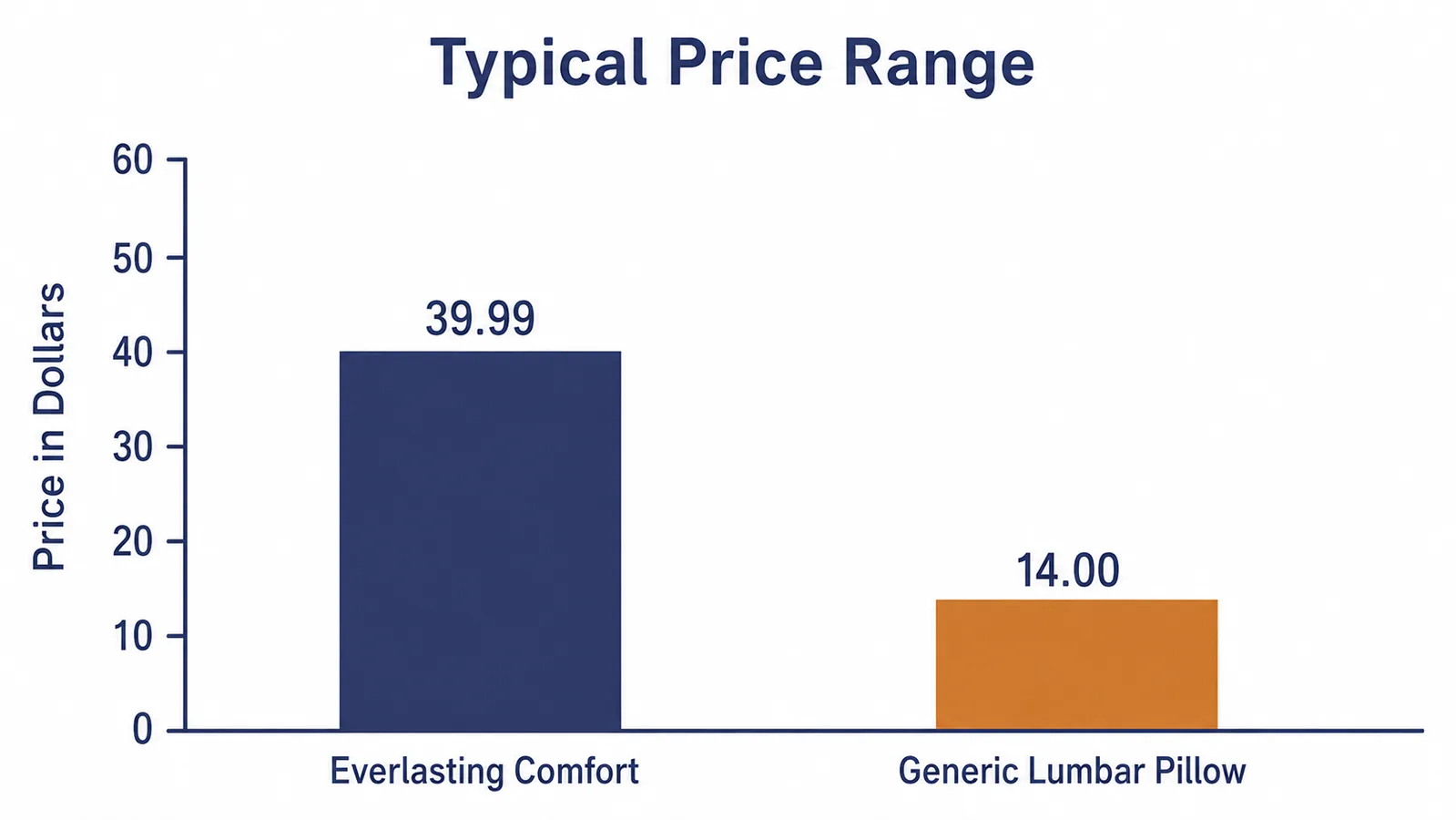
| Today's price | Around forty dollars | Usually twelve to fifteen dollars |
| Foam density and contour | Dense memory foam that holds a curved shape matching your lower back | Softer foam, flatter out of the box, compresses faster under daily weight |
| Attachment strap | Adjustable elastic strap that wraps around a truck seat, office chair, or recliner and stays put | Thin strap or none at all, tends to slide down mid-shift |
| Cover | Removable, machine washable mesh cover | Cover usually sewn in place, so you wipe it down instead of washing it |
| Review track record | Over 37,000 reviews and a 4.4 star average across years on the market | Individual listings often show a few hundred reviews and change sellers often |
| Company backing if something fails | Established brand you can actually contact | Marketplace seller that may not exist in six months |
| Fine to leave permanently in a second vehicle | Feels wasteful buying a second one just to leave in a car that barely gets driven | Cheap enough to buy two and never think twice |
How I Tested Both Pillows
I ran this comparison the plain way, not a lab test, just two pillows doing real work over the same stretch of months. Everlasting Comfort went in the driver's seat of my Freightliner for eleven-hour shifts on Midwest routes, through a stretch of summer heat and a couple of weeks of near-freezing mornings, because temperature swings change how foam behaves more than people think. The generic pillow, a twelve-dollar foam wedge I grabbed off a marketplace listing with decent reviews, rode in Denise's car for the school run and grocery runs, plus a few weeks in my recliner at home so I could feel it fresh instead of already broken in from the truck seat.
Over that stretch I logged somewhere near nine thousand miles in the Freightliner seat with Everlasting Comfort behind me, and Denise put a little over a thousand miles on the generic pillow doing school pickups and weekend errands, plus about six weeks of evening use in my recliner at home so I could feel it fresh at the end of a long day. That's enough real-world time for foam to either hold up or start giving out, which matters more than how a pillow feels the first night out of the box, and it's more time than most reviews ever bother putting in before writing something up.
Three months in, the difference showed up mostly in how each one held its shape under repeated pressure, not in how either one felt on day one. I'm not grading these on the first week, because almost any lumbar pillow feels decent for the first week. I'm grading them on what they're still doing at hour eight of a shift, three months after you bought them, when the foam has taken a real beating and the strap has been stretched and released a thousand times.
Where Everlasting Comfort Wins
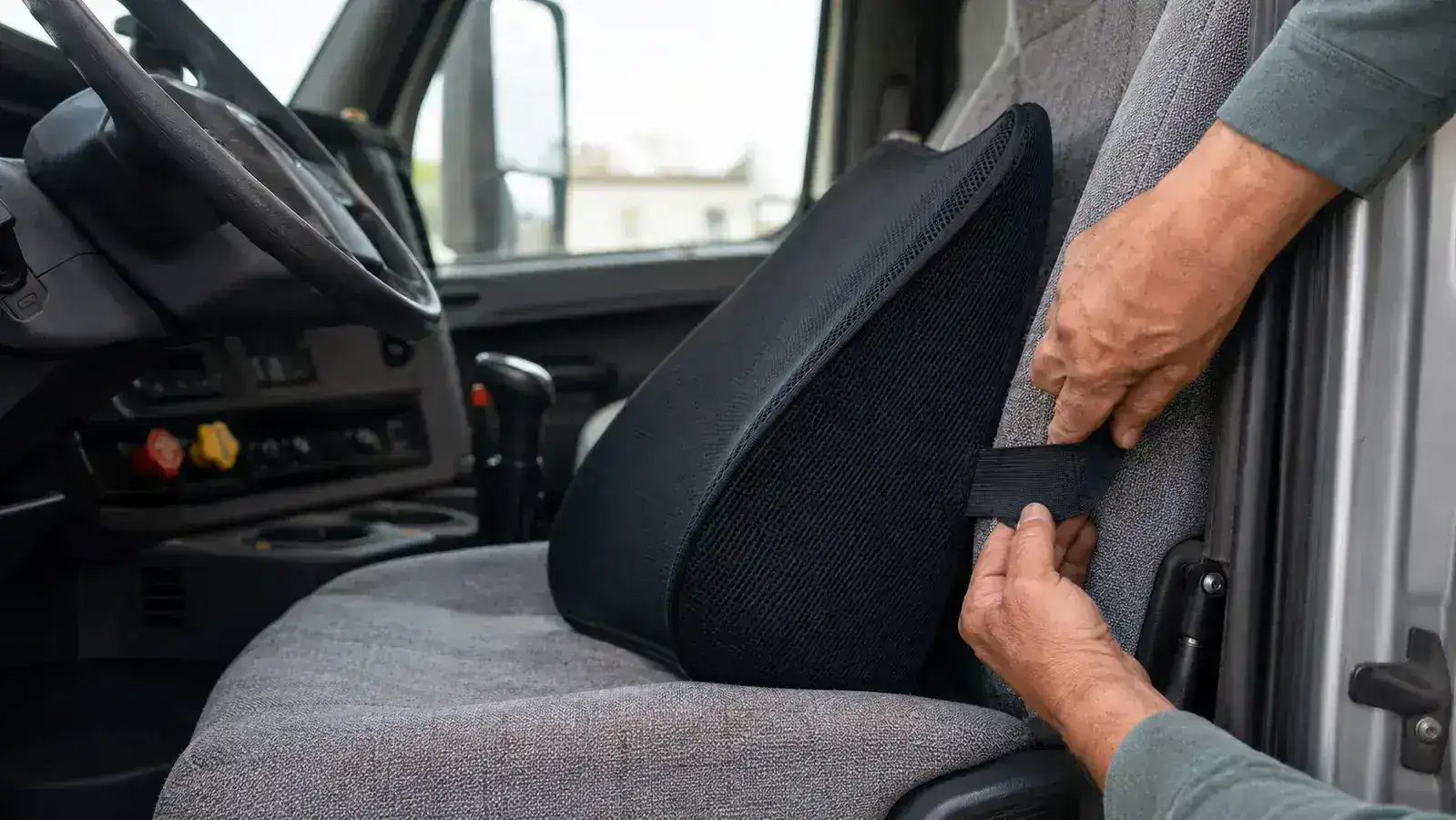
Everlasting Comfort earns its keep in the details that only show up over time. The foam is dense enough that it still pushes back into the curve of my lower back after five months of daily use, where a lot of cheaper foam goes soft and flat by month two and starts feeling like a pancake instead of a pillow. The shape is contoured, not just a flat rectangle, so it actually sits into the small of your back instead of just being a bump you lean against and shift around trying to find the right spot. There's also no strong chemical smell out of the bag, which sounds minor until you're sealed inside a cab with the windows up on a cold night.
The strap system matters more than people expect, and it's the part that surprised me most. Everlasting Comfort's elastic strap wraps around a truck seat, an office chair, or a recliner and stays put through a full shift of shifting around, reaching for the CB, twisting to check a mirror, and climbing in and out at every stop. The generic pillow's strap, on the days it even had one, started slipping down by week three, which meant I'd catch myself twenty minutes into a drive with the pillow sitting somewhere around my tailbone instead of my lower back, which honestly makes it worse than having no pillow at all.
The cover matters too, more than I expected before I actually lived with both of them. Everlasting Comfort's cover comes off and goes in the wash, which matters a lot more once you've sweated through it a few dozen times in a hot cab with no shore power running. And with over 37,000 reviews behind it and a 4.4 star average, if something's wrong with a unit, there's an established company to actually contact, not a marketplace listing that might not exist by the time you need it in six months. I go deeper into all of this, month by month including where the foam started to sag first, in my full long-term review of the Everlasting Comfort pillow.
At home, the same pillow works in a recliner or a desk chair without any adjustment, and Denise ended up stealing mine for her own desk chair more than once, which tells you something about how it holds up outside of a truck seat too. It's not a truck-specific product, it's just a lumbar pillow that happens to be sturdy enough to survive a truck seat, and that same sturdiness carries over to a recliner, a gaming chair, or a dining chair for anyone who sits through long stretches of work at a table. Cold mornings didn't stiffen the foam into a brick the way I half expected either, which matters if your rig sits in a lot overnight without the engine running, and it kept its give even after a night near freezing with the heater off to save fuel.
The cheap one gets you through a road trip. Everlasting Comfort gets you through a career.
Where the Generic Pillow Wins
The generic pillow's real win is the price, and I'm not going to pretend that doesn't matter, especially for a driver watching every dollar between fuel stops. At twelve to fifteen dollars, it costs a third of what Everlasting Comfort runs, and for some people that's the whole decision right there. If you just need something to keep your back from aching on an occasional two-hour commute, or you're not sure a lumbar pillow will even help your particular ache, the generic version does that job fine, at least for the first month or two before the foam starts to flatten out and the shape stops matching your back.
Where it genuinely wins, though, is the thing nobody puts in a comparison chart. It's cheap enough that you don't feel guilty leaving one permanently in a second vehicle and forgetting about it. I've got one wedged in Denise's car right now and I've never thought twice about it, because losing it, leaving it out in the rain, or wrecking it isn't a real loss at twelve dollars. Buying a second forty-dollar Everlasting Comfort just to leave in a car that gets driven twice a week feels wasteful in a way the generic pillow never does. It's also the one I'd hand to someone who just wants to try the idea of a lumbar pillow before committing to a name brand, since a twelve-dollar experiment is an easy yes even if it doesn't work out. If you want the broader case for why a dedicated lumbar pillow beats a flat seat cushion in the first place, I laid that out in ten reasons a lumbar support pillow fixes back pain a seat cushion can't.
Still Feeling It at Hour Nine?
If your lower back is already talking to you by the afternoon, a pillow that holds its shape matters more than a pillow that's cheap. Check today's price on the Everlasting Comfort lumbar pillow before your next long shift.
Amazon Check Today's Price on Amazon →
Who Should Buy Which
The honest tradeoff, once you've lived with both for a season, is durability against disposability. Everlasting Comfort holds its shape longer, supports better through a real ten-hour workday, and comes with a company standing behind it. The generic pillow costs almost nothing and is fine to treat as replaceable, but it won't still be doing its job the same way six months from now, and you'll likely be buying a second or third one by the time an Everlasting Comfort owner is still on their first. Neither one is the wrong purchase, they're just built for different amounts of daily punishment.
If you're in a seat for eight, ten, eleven hours a day, whether that's driving a route, a desk job, or a brutal commute, pay for Everlasting Comfort. The difference in how your back feels at hour nine versus hour three is real, and it's the difference that actually matters if you're doing this every single day for years, not just once in a while. Drivers, remote workers on long calls, and anyone with a home office chair that doesn't already have real lumbar support all fall into this camp, and the cost stops mattering pretty fast once you're logging that many hours a week in one seat.
If you need a second one for a car that barely gets used, you're outfitting a chair nobody sits in for long stretches, or you're testing whether a lumbar pillow even helps your particular ache before you spend real money on the name brand, the generic pillow is a reasonable way to find out. Just expect to replace it sooner, and don't be surprised when the strap gives out or the foam goes flat before the year is up. A teenager who just got their license and only complains about a two-hour drive to college a couple times a semester doesn't need to spend forty dollars either. I wouldn't feel bad recommending the generic option to someone on a tight budget who just needs relief for a shorter commute, or to a family that wants one in every vehicle without thinking too hard about it.
When a Pillow Isn't the Answer
One more thing that matters more than either pillow. A lumbar pillow can ease the kind of ache that comes from sitting in one position too long, and that's genuinely worth solving for anyone who sits for a living. But it isn't a treatment for anything beyond that, and I'm not a doctor, so nothing here is medical advice. If your back pain is getting worse instead of better, if it doesn't ease up with rest and a few days off, or if you notice numbness, tingling, or weakness running down a leg, that's a conversation for an actual doctor, not something to solve with a pillow review.
Twenty Years in a Truck Seat Taught Me This One
The cheap version will get you by for a while. If you're sitting for a living, the one that still holds its shape at month five is the one worth paying for. See today's price on the Everlasting Comfort lumbar pillow.
Amazon Check Today's Price on Amazon →